
What Is a Neuroma?
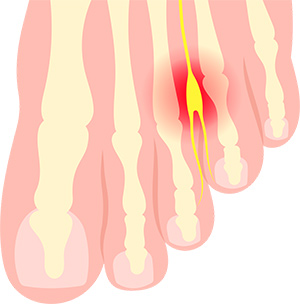
A neuroma is a thickening of nerve tissue that may develop in various parts of the body. The most common neuroma in the foot is a Morton’s neuroma, which occurs between the third and fourth toes. It is sometimes referred to as an intermetatarsal neuroma. Intermetatarsal describes its location in the ball of the foot between the metatarsal bones. Neuromas may also occur in other locations in the foot.
The thickening of the nerve that defines a neuroma is the result of compression and irritation of the nerve. This compression creates enlargement of the nerve, causing the symptoms of Morton’s neuroma and eventually leading to permanent nerve damage.
Causes of Morton’s Neuroma
Anything that causes compression or irritation of the nerve can lead to the development of a neuroma. One of the most common offenders is wearing shoes that have a tapered toe box or high-heeled shoes that cause the toes to be forced into the toe box. People with certain foot deformities—bunions, hammertoes, flatfeet or more flexible feet—are at higher risk for developing a neuroma. Other potential causes are activities that involve repetitive irritation to the ball of the foot, such as running or court sports. An injury or other type of trauma to the area may also lead to a neuroma.
Symptoms of Morton’s Neuroma
If you have a Morton’s neuroma, you may have one or more of these symptoms where the nerve damage is occurring:
- Tingling, burning or numbness
- Pain
- A feeling that something is inside the ball of the foot
- A feeling that there is something in the shoe or a sock is bunched up
The progression of a Morton’s neuroma often follows this pattern:
- The symptoms begin gradually. At first, they occur only occasionally when wearing narrow-toed shoes or performing certain aggravating activities.
- The symptoms may go away temporarily by removing the shoe, massaging the foot or avoiding aggravating shoes or activities.
- Over time, the symptoms progressively worsen and may persist for several days or weeks.
- The symptoms become more intense as the neuroma enlarges and the temporary changes in the nerve become permanent.
Diagnosis
The foot and ankle surgeon will examine the foot to determine a diagnosis, then position the foot and tap on the nerve to check if the symptoms can be reproduced. Other testing or imaging studies may be used to diagnose nerve issues. The ideal time to see your foot and ankle surgeon is when symptoms first appear.
Conservative Treatment
In developing a treatment plan, your foot and ankle surgeon will first determine how long you have had the neuroma and will evaluate its stage of development. Treatment approaches vary according to the severity of the problem. For nerve conditions, treatment options may include:
- Rest. Staying off the foot prevents further injury and encourages healing.
- Icing. Placing an icepack on the affected area helps reduce swelling.
- Oral medications. Nonsteroidal anti-inflammatory drugs (NSAIDs), such as ibuprofen, help reduce the pain and inflammation.
- Padding.strong> Padding techniques provide support for the metatarsal arch, thereby lessening the pressure on the nerve and decreasing the compression when walking.
- Orthotic devices. Custom orthotic devices provided by your foot and ankle surgeon provide the support needed to reduce pressure and compression on the nerve.
- Immobilization. Restricting movement of the foot by wearing a cast is sometimes necessary to enable the nerve and surrounding tissue to heal.
- Physical therapy. Ultrasound therapy, exercises and other physical therapy modalities may be prescribed to reduce symptoms.
- Shoe modifications. Wear shoes with a wide toe box and avoid narrow-toed shoes or shoes with high heels.
- Medications. Oral nonsteroidal anti-inflammatory drugs (NSAIDs), such as ibuprofen, may be recommended to reduce pain and inflammation.
- Injection therapy. Treatment may include injections of cortisone, local anesthetics or other agents.
When Is Surgery Needed?
Sometimes surgery is the best option for the nerve condition. The foot and ankle surgeon will determine if surgery is necessary and will select the appropriate procedure or procedures based on the cause of the condition.