
People living with diabetes are prone to having foot problems, often because of two complications of diabetes: nerve damage (neuropathy) and poor circulation. Neuropathy causes loss of feeling in your feet, taking away your ability to feel pain and discomfort, so you may not detect an injury or irritation. Poor circulation in your feet reduces your ability to heal, making it hard for even a tiny cut to resist infection.
Diabetes increases the risk of having a variety of foot problems. Furthermore, with diabetes, minor foot problems can escalate into serious complications.
Diabetes-Related Foot & Leg Problems
- Infections and ulcers (sores) that do not heal. An ulcer is a sore in the skin that may go all the way to the bone. Because of poor circulation and neuropathy in the feet, cuts or blisters can easily turn into ulcers that become infected and will not heal. This is a common—and serious—complication of diabetes and can lead to a loss of your foot, your leg or your life.
- Corns and calluses. When neuropathy is present, you cannot tell if your shoes are causing pressure and producing corns or calluses. Corns and calluses must be properly treated or they can develop into ulcers.
- Dry, cracked skin. Poor circulation and neuropathy can make your skin dry. This may seem harmless, but dry skin can result in cracks that may become sores and can lead to infection.
- Nail disorders. Ingrown toenails (which curve into the skin on the sides of the nail) and fungal infections can go unnoticed because of loss of feeling. If they are not properly treated, they can lead to infection.
- Hammertoes and bunions. Nerve damage affecting muscles can cause muscle weakness and loss of tone in the feet, resulting in hammertoes and bunions. If left untreated, these deformities can cause ulcers.
- Charcot foot. This is a complex foot deformity. It develops as a result of loss of sensation and an undetected broken bone that leads to destruction of the soft tissue of the foot. Because of neuropathy, the pain of the fracture goes unnoticed and the patient continues to walk on the broken bone, making it worse. This disabling complication is so severe that surgery, and occasionally amputation, may become necessary.
- Poor blood flow. In diabetes, the blood vessels below the knee often
How HOCO Can Help?
Your foot and ankle surgeon can help wounds heal, preventing amputation. Many new surgical techniques are available to save feet and legs, including joint reconstruction and wound healing technologies. Getting regular foot checkups and seeking immediate help when you notice something can keep small problems from worsening. Your foot and ankle surgeon works together with other healthcare providers to prevent and treat complications from diabetes.
Diabetic Foot Care Guidelines
To avoid serious foot problems that could result in losing a toe, foot or leg, follow these guidelines.
- Check feet daily for cuts, blisters, swelling, or nail problems.
- Wash in lukewarm water, dry gently (especially between toes).
- Moisturize, but not between toes.
- Trim nails straight across; see Dr. Bui for nail, corn, or callus issues.
- Wear clean, dry socks (preferably diabetic socks); avoid elastic tops.
- Never walk barefoot; always wear shoes/slippers.
- Inspect shoes before wearing; keep feet warm and dry.
- Avoid heating pads/hot water bottles; wear socks if cold.
- Maintain blood sugar control and don’t smoke.
- Get regular foot exams with Dr. Bui.
What Is Diabetic Peripheral Neuropathy?
Diabetic neuropathy is nerve damage caused by diabetes. When it affects the arms, hands, legs and feet, it is known as diabetic peripheral neuropathy. Diabetic peripheral neuropathy is different from peripheral arterial disease (poor circulation), which affects the blood vessels rather than the nerves.
Three different groups of nerves can be affected by diabetic neuropathy:
- Sensory nerves, which enable people to feel pain, temperature and other sensations
- Motor nerves, which control the muscles and give them their strength and tone
- Autonomic nerves, which allow the body to perform certain involuntary functions, such as sweating
Diabetic peripheral neuropathy does not emerge overnight. Instead, it usually develops slowly and worsens over time. Some patients have this condition long before they are diagnosed with diabetes. Having diabetes for several years may increase the likelihood of having diabetic neuropathy. The loss of sensation and other problems associated with nerve damage make a patient prone to developing skin ulcers (open sores) that can become infected and may not heal. This serious complication of diabetes can lead to loss of a foot, a leg or even a life.
Causes
The nerve damage that characterizes diabetic peripheral neuropathy is more common in patients with poorly managed diabetes. However, even patients living with diabetes who have excellent blood sugar (glucose) control can develop diabetic neuropathy. There are several theories as to why this occurs, including the possibilities that high blood glucose or constricted blood vessels produce damage to the nerves.
As diabetic peripheral neuropathy progresses, various nerves are affected. These damaged nerves can cause problems that encourage development of ulcers. For example:
- Deformities (such as bunions or hammertoes) resulting from motor neuropathy may cause shoes to rub against toes, creating a sore. The numbness caused by sensory neuropathy can make the patient unaware that this is happening.
- Because of numbness, a patient may not realize that s/he has stepped on a small object and cut the skin.
- Cracked skin caused by autonomic neuropathy, combined with sensory neuropathy’s numbness and problems associated with motor neuropathy, can lead to developing a sore.
Motor Neuropathy (Deformity) + Ill-Fitting Shoes + Sensory Neuropathy (numbness) = Ulcers (sores)
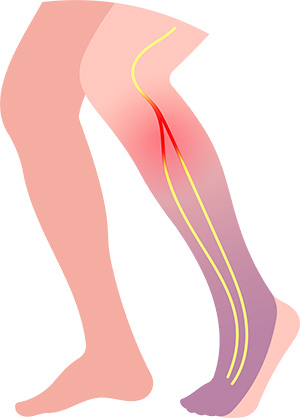
Symptoms
Depending on the type(s) of nerves involved, one or more symptoms may be present in diabetic peripheral neuropathy.
For sensory neuropathy:
- Numbness or tingling in the feet
- Pain or discomfort in the feet or legs, including prickly, sharp pain or burning feet
For motor neuropathy:
- Muscle weakness and loss of muscle tone in the feet and lower legs
- Loss of balance
- Changes in foot shape that can lead to areas of increased pressure
For autonomic neuropathy:
- Dry feet
- Cracked skin
Diagnosis
To diagnose diabetic peripheral neuropathy, the foot and ankle surgeon will obtain the patient’s history of symptoms and will perform simple in-office tests on the feet and legs. This evaluation may include assessment of the patient’s reflexes, ability to feel light touch and ability to feel vibration. In some cases, additional neurologic tests may be ordered.
Treatment
First and foremost, treatment of diabetic peripheral neuropathy centers on control of the patient’s blood sugar level. In addition, various options are used to treat the painful symptoms.
Medications are available to help relieve specific symptoms, such as tingling or burning. Sometimes a combination of different medications is used.
In some cases, the patient may also undergo physical therapy to help reduce balance problems or other symptoms.
Prevention
The patient plays a vital role in minimizing the risk of developing diabetic peripheral neuropathy and in preventing its possible consequences. Some important preventive measures include:
- Keep blood sugar levels under control.
- Wear well-fitting shoes to avoid getting sores.
- Inspect your feet every day. If you notice any cuts, redness, blisters or swelling, see your foot and ankle surgeon right away. This can prevent problems from becoming worse.
- Visit your foot and ankle surgeon on a regular basis for an examination to help prevent the foot complications of diabetes.
- Have periodic visits with your primary care physician or endocrinologist. The foot and ankle surgeon works together with these and other providers to prevent and treat complications from diabetes