
Why choose Howard County Foot & Ankle for orthotics?
We provide different tiers of orthotics to guarantee that your feet are properly cared for. At Howard County Foot and Ankle, Dr. Bui has given careful thought to the best orthotics for her patients. She collaborates with several labs to provide individualized features for each patient.
We educate our patients on how to determine whether an orthotic is firm and supportive enough, as well as how to choose appropriate footwear. We present a list of shoe recommendations since orthotics function best when worn with appropriate footwear. We also recognize that you are human, and it is acceptable to wear sandals or house slippers on occasion. We have specific recommendations for house slippers, sandals, hiking boots, cleats, and more!
Plain radiographs are taken on a patient's initial visit, and Dr. Bui reviews what she observes and applies it to biomechanics and how wearing an orthotic will assist you. We look forward to providing you with individualized recommendations.
Medical Grade Inserts
Medical grade insoles are recommended for correcting biomechanical foot disorders. It helps to maintain the foot in a neutral position to efficiently and comfortably correct the gait cycle. It helps to support the natural arch of the foot. When a person engages in strenuous activity, the arch of their foot is put under stress. Using our medical grade inserts can provide extra support so the arch does not overstretch or flatten during vigorous activity. The medical grade insert absorbs the impact of the movement, minimizing the likelihood of injury or the severity of pain.
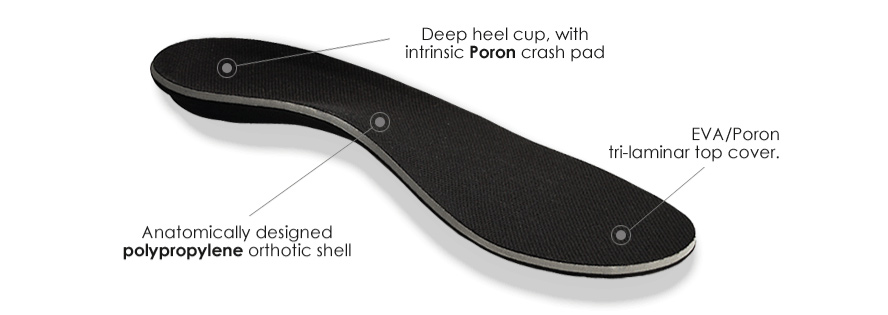
QUADRASTEP
What is QUADRASTEPS?
QUADRASTEPS or QUADRASTEP System is a patented foot orthotic system designed to address biomechanical imbalances in the foot. It provides custom-made orthotics based on an individual's unique foot structure and arch type. The goal of the QUADRASTEP System is to provide tailored support and correction to address various foot issues, such as overpronation or supination. Custom orthotics based on an individual's specific foot type can help improve alignment, reduce discomfort, and enhance overall foot function.
Indications for QUADRASTEPS
Some of the most common foot conditions that may be treated with QUADRASTEP foot orthoses include:
- Metatarsalgia (pain in the ball of the foot)
- Plantar Fasciitis (heel or arch pain)
- Toe Deformities (bunions and hammertoes)
- Neuromas and Tarsal Tunnel Syndrome (burning or tingling sensations)
- Shin Splints
- Tendinitis
- Hip Bursitis
- Knee Pain
- Lower Back Pain
How Does the QUADRASTEP System Work?
The QUADRASTEP System is based on a clinical assessment algorithm that identifies and differentiates the structural and functional aspects of the foot into 6 specific foot "types". Each foot type influences not only the patient's gait but also the conditions and pathologies that may affect them throughout their lives. Your doctor will determine which type is the best fit for your feet.
By definition, a foot orthotic is a non-surgical medical device made to control the way a foot functions. Foot pain is one of the chief symptoms of abnormal foot function. The QUADRASTEP foot orthotics when inserted into your shoes can correct abnormalities in your biomechanical function, thus reducing pain, providing support, and relieving stress on joints and bones. The QUADRASTEP System approach to prescribing prefabricated functional foot orthoses is easy to use and brings immediate improvement to patients' symptoms.
What Makes QUADRASTEP Foot Orthotic System Unique?
QUADRASTEP orthotics are manufactured from an injection molded thermoplastic compound which has a unique combination of strength with a "soft-edge" feel which provides remarkable support while maintaining high patient comfort and therefore improving patient compliance. The devices are a single piece comprising all of the required postings, recesses, and heel cup/sidewall heights to effectively treat the specific foot type diagnosed requiring no additional adjustments.
How Do I Know My Foot Type?
The QUADRASTEP system categorizes feet into six different types, each associated with a specific orthotic prescription. Your physician will conduct multiple tests to determine which category your feet fall in to prescribe the appropriate type of orthotics.
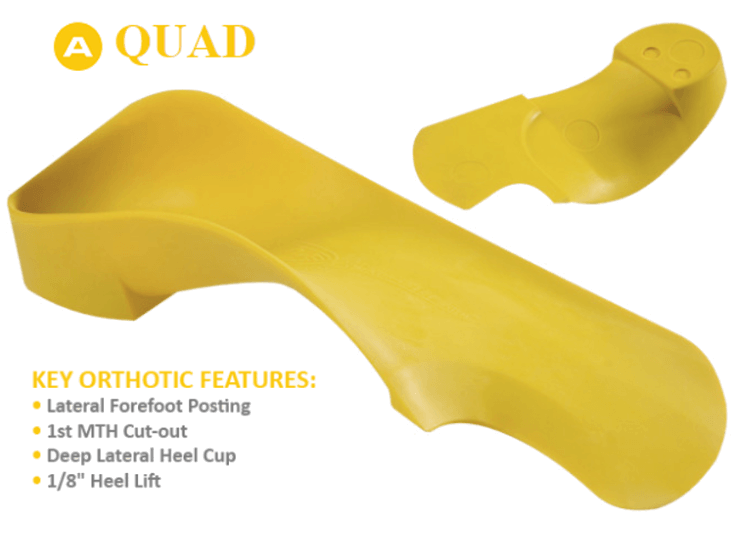
Type A QUADRASTEP Orthotics (Severe Pes Cavus)
- Lateral Ankle Instability
- Heel Pain
- Peroneal Tendonitis
- Lower Back Pain
- Fifth Metatarsal Base Pressure
- Knee Recurvatum
- Sesamoiditis, Hammer Toes
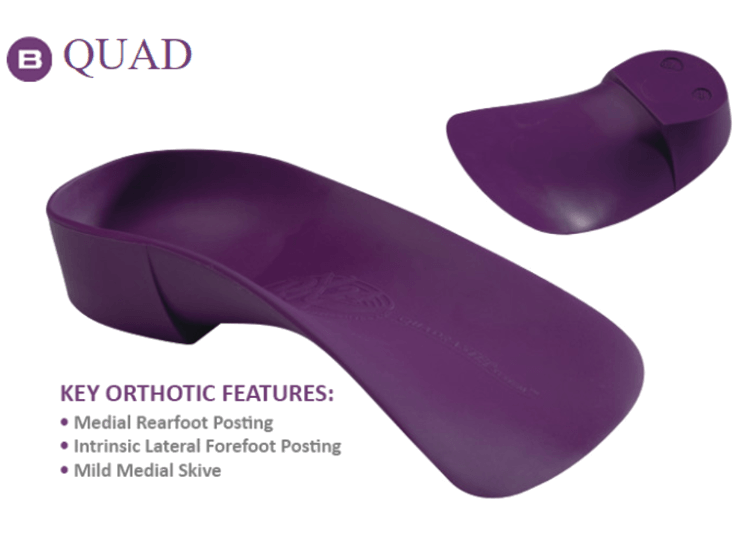
Type B QUADRASTEP Orthotics (Mild Pes Cavus)
- Neuromas
- In-Toeing Gait
- Hypermobility of the First Ray
- Sesamoiditis
- Sacroiliac pain
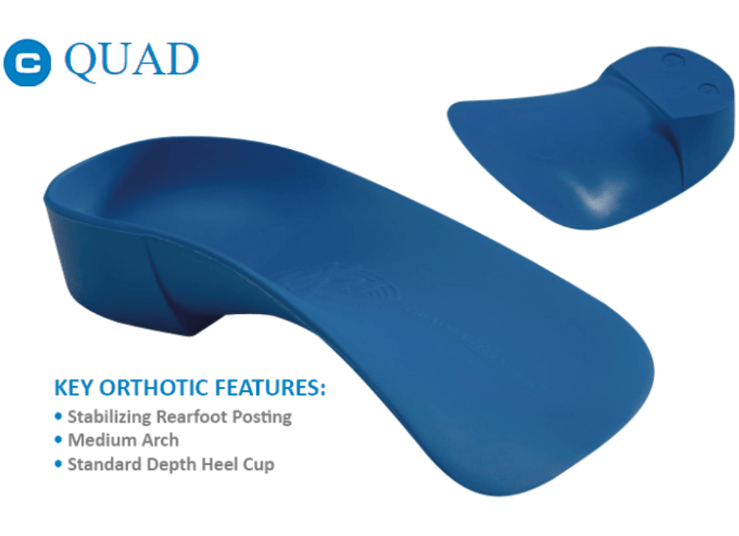
Type C QUADRASTEP Orthotics (Neutral Foot)
- Lower Back Pain
- Hip Pain
- Retrocalcaneal Heel Pain
- Iliotibial Band Syndrome
- Pinch Callus Medial Hallux
- Haglund’s Deformity
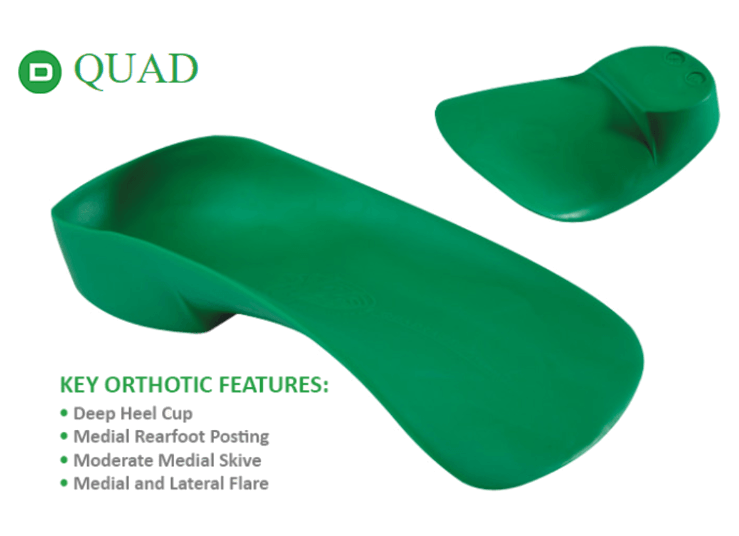
Type D QUADRASTEP Orthotics (Moderate Pes Clavus)
- Metatarsalgia
- Plantar Fasciitis
- Functional Hallux Limitus
- Posterior Tibial Tendonitis
- Patellofemoral Pain Syndrome
- Dorsal Bunions
- Neuromas
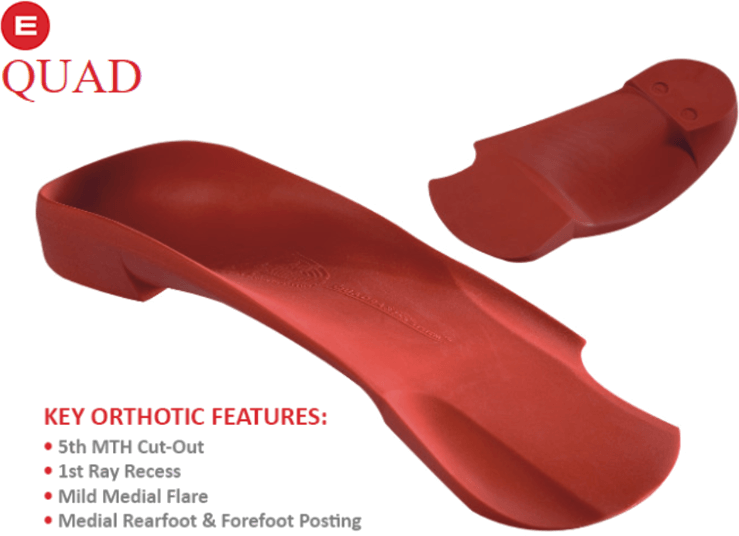
Type E QUADRASTEP Orthotics (Abductovarus Forefoot)
- Plantar Fasciitis
- Knee Pain
- Shin Splints
- Calcaneal Apophysitis (Sever’s Disease)
- Tailor’s Bunionette
- Osgood-Schlatter Disease
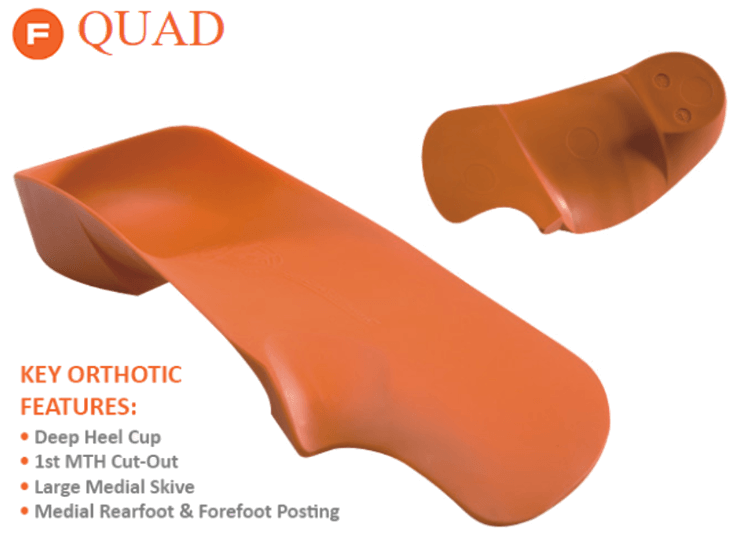
Type F QUADRASTEP Orthotics (Severe Pes Planovalgus/Flatfoot)
- Posterior Tibial Dysfunction
- Plantar Fasciitis
- Tarsal Tunnel Syndrome
- Knee Valgus/Degenerative Joint Disease (DJD)
- Bunions
- Subfibular Impingement
- Splayfoot
littleSTEPS (Pediatric)
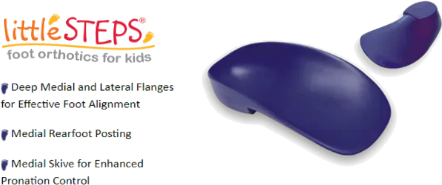
What is littleSTEPS®?
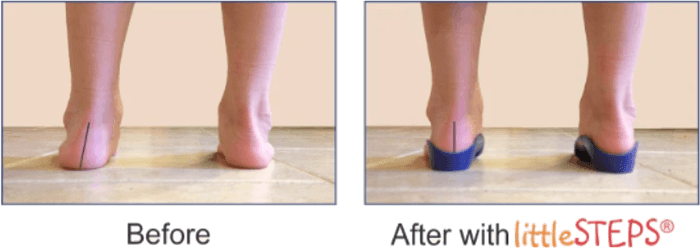
littleSTEPS® are prefabricated foot orthoses specifically crafted for children. These orthoses offer a cost-effective alternative to custom-made foot orthoses while still providing corrective measures based on prescribed needs. This facilitates earlier intervention and treatment for various musculoskeletal conditions commonly found in children. Available in sizes ranging from toddler 5 to youth/adult size 8.7 (Euro sizes 21-42), littleSTEPS® cater to children of all ages, from toddlers to teenagers.
What sets littleSTEPS® apart?
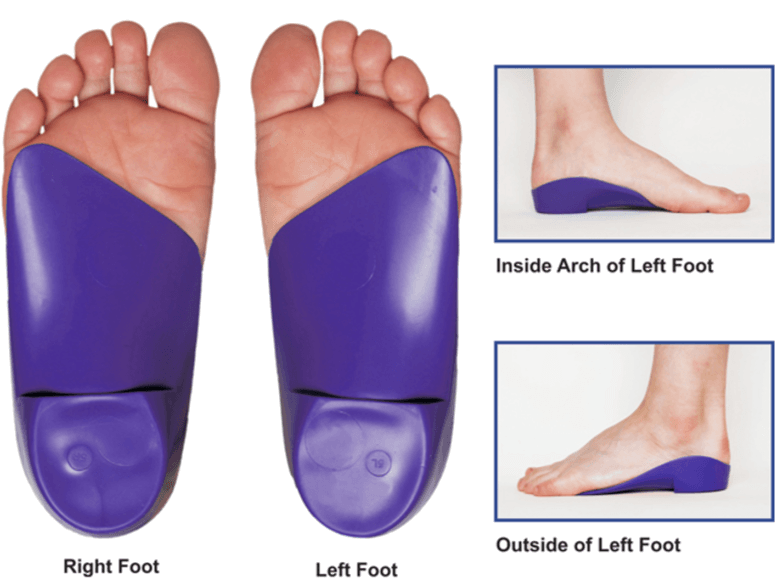
littleSTEPS® offer the same level of functional foot control as prescribed foot orthoses. Notable features include:
- A deeply contoured heel cup, maximizing rearfoot control and realignment of the Achilles tendon.
- Exceptional arch support with a deep flare, ensuring both correction and comfort.
- Utilization of a unique thermoplastic compound that combines strength with a soft-edge feel for enhanced patient comfort.
- Durability and ease of cleaning with simple soap and water.
- Compatibility with most standard athletic shoes.
Foot Orthotics and Gait Plates
What are Foot Orthotics?
Foot orthotics also known as orthoses are specially designed supportive shoe inserts worn against the foot to relieve pain, provide protection, and treat foot or ankle deformities. They are available in multiple sizes and shapes to deliver prescription-based foot correction or may be custom-made with the help of a plaster cast or computer-aided 3D imaging of the foot.
Indications for Foot Orthotics
Foot orthotics can be used to treat:
- Foot ulceration
- Heel pain
- Charcot foot
- Hallux rigidus
- Plantar fasciitis
- Clubfoot
- Corns and calluses
- Tendonitis
- Bunions
- Bursitis
- Rheumatoid arthritis
Foot orthotics can also help in the treatment of knee, hip, and back pain
Types of Foot Orthotics
Foot orthotics are mainly classified into three categories:
- Rigid: These help improve foot form and function.
- Semi-rigid: These provide support and improve balance with movement such as when walking and participating in sports.
- Soft: These have shock-absorbing properties and are used to relieve pain due to foot deformities and arthritis, and to help heal corns, calluses, or diabetic ulcers.
Gait Plates
What are Gait Plates?
Gait plates, also known as shoe inserts or orthotic devices, are specialized tools designed to address biomechanical issues affecting an individual's gait, or walking pattern. These plates are typically placed within the shoe to provide support and correction, targeting specific areas of the foot and ankle.
Benefits of Gait Plates
The important benefits of gait plates include:
- Enhanced stability and balance, reducing the risk of falls and injuries.
- Alleviation of pain and discomfort associated with walking abnormalities.
- Redistribution of pressure and provision of cushioning for greater comfort.
- Promotion of proper alignment of the foot and ankle.
- Improvement of overall biomechanics, reducing strain on muscles and joints.
- Customization options to address individual needs.
- Enhanced effectiveness and comfort for each user.
- Improvement of gait mechanics, leading to enhanced mobility and quality of life.
Custom Orthotics
At Howard County Foot & Ankle, we use the latest technology to create custom orthotics that fit your feet perfectly and address your specific needs. Custom orthotics are devices that are designed to support and correct the alignment and function of your feet and lower limbs. They can help with various conditions, such as plantar fasciitis, bunions, flat feet, heel pain, and more.
Advanced Technologies in Custom Orthotics
We use a 3D scanner to capture the shape and biomechanics of your feet. The scanner is a device that uses infrared light to create a digital image of your feet in seconds. The scanner is more accurate and convenient than traditional methods, such as plaster casts or foam boxes, which can be messy, time consuming, and prone to errors.
The scanned data is then transferred to a software program that allows us to customize and modify the orthotics according to your diagnosis, prescription, and preferences. We can adjust the size, shape, material, and features of the orthotics to suit your needs.
The final design is then sent to a 3D printer, which uses a special resin to create the orthotics layer by layer. The 3D printer can produce orthotics that are lightweight, durable, and precise, with a unique lattice structure that provides optimal support and cushioning for your feet
How to Use Your Custom Orthotics?
Once you receive your custom orthotics, we will check the fit and comfort and make any necessary adjustments. We will also provide you with break-in instructions, which are important to follow to ensure a smooth transition and avoid any discomfort or injury.
If you have any questions or concerns, please do not hesitate to contact us. We are here to help you get the most out of your custom orthotics.