
What is a Bunion?
A bunion (also known as hallux valgus) is commonly defined as a bump on the side of the big toe. However, a bunion is more than that. The visible bump reflects changes in the bony framework of the front part of the foot. The big toe bends toward the second toe instead of pointing straight ahead. This causes the bones to become misaligned, resulting in the bunion bump.
Bunions are a progressive condition. They begin with a leaning of the big toe, which gradually changes the angle of the bones over time, resulting in the characteristic bump that grows more pronounced. Symptoms normally arise later in the disease's progression, but some people never develop them. Bunions are common in women and tend to run in families (heredity). The major cause of bunions is prolonged wearing of ill-fitting shoes such as tight, narrow, and high-heeled shoes that compress the toes and exert excessive pressure while walking. The condition becomes worse and more painful as the bump grows bigger in size. Certain conditions such as rheumatoid arthritis and gout may also cause bunions.
Symptoms
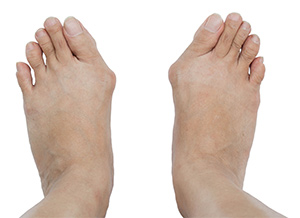
Symptoms, which occur at the site of the bunion, may include:
- Pain or soreness
- Inflammation and redness
- A burning sensation
- Possible numbness
Symptoms occur most often when wearing shoes that crowd the toes, such as shoes with a tight toe box or high heels. This may explain why women are more likely to have symptoms than men. In addition, spending long periods of time on your feet can aggravate the symptoms of bunions.
Diagnosis
To properly diagnose the condition, the foot and ankle surgeon may take x-rays to determine the degree of the deformity and the changes that have occurred.
Because bunions are progressive, they do not go away and usually worsen with time. However, not all cases are alike; some bunions progress more quickly than others. A treatment plan can be developed once our provider has evaluated your bunion.
Prevention and Conservative Treatment
Bunions can result from both genetic predisposition and lifestyle factors, such as wearing ill-fitting shoes or high heels. While surgery may be necessary for severe cases, preventive and conservative measures can significantly reduce discomfort, slow progression, and improve foot function:
- Proper Footwear: Wear shoes with a wide toe box to avoid crowding and misalignment. Avoid high heels, which push the toes forward and strain the metatarsals.
- Orthotics & Padding: Use custom orthotics, bunion pads, toe spacers, or night splints to offload pressure, reduce rubbing, and support proper alignment.
- Activity & Lifestyle Modification: Limit repetitive activities that stress the forefoot. Choose low-impact exercises such as cycling, swimming, or rowing. Stretching, range-of-motion exercises, and foot massages can maintain flexibility and reduce pain.
- Pain & Inflammation Relief: Apply ice packs, use warm soaks, or massage the feet to relieve soreness. Over-the-counter NSAIDs, topical gels, or prescribed anti-inflammatory medications and injections may be recommended by your doctor.
- Weight Management: Maintaining a healthy weight helps reduce excess stress on the feet and bunion areas.
- Daily Habits: Take breaks to slip off your shoes and stretch your feet throughout the day.
These steps can help manage bunion symptoms, prevent worsening, and potentially delay the need for surgical correction.
Surgical Treatment
The surgical method of removal or excision of a bunion is known as a bunionectomy. The goal of bunion surgery is to relieve pain and restore the normal position and function of the big toe. As with all surgical procedures, bunionectomy may be associated with certain complications. Some of the surgical complications include infection, blood clot formation, recurrence of the bunion, damage to the neighboring nerves, bleeding and unrelieved pain.
When is surgery needed?
If conservative care fails to relieve bunion pain and when the pain of a bunion interferes with daily activities, it is time to discuss surgical options with a foot and ankle surgeon. Together you can decide if surgery is best for you.
A variety of surgical procedures is available to treat bunions. The procedures are designed to remove the bump of bone, correct the changes in the bony structure of the foot and correct soft tissue changes that may also have occurred. The goal of surgery is the reduction of pain and deformity.
In selecting the procedure or combination of procedures for your particular case, the foot and ankle surgeon will take into consideration the extent of your deformity based on the x-ray findings, your age, your activity level and other factors. The length of the recovery period will vary, depending on the procedure or procedures performed.
Tailor’s Bunion
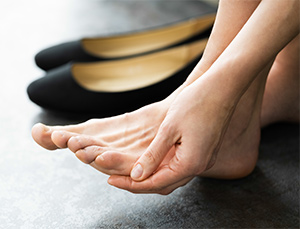
Tailor’s bunion, also called a bunionette, is a prominence of the fifth metatarsal bone at the base of the little toe. The metatarsals are the five long bones of the foot. The prominence that characterizes a tailor’s bunion occurs at the metatarsal head, located at the far end of the bone where it meets the toe. Tailor’s bunions are not as common as bunions, which occur on the inside of the foot, but they are similar in symptoms and causes.
Why is it called a tailor’s bunion? The deformity received its name centuries ago, when tailors sat cross-legged all day with the outside edge of their feet rubbing on the ground. This constant rubbing led to a painful bump at the base of the little toe, or tailor’s bunion pain.
Often a tailor’s bunion is caused by an inherited faulty mechanical structure of the foot. In these cases, changes occur in the foot’s bony framework, resulting in the development of an enlargement. The fifth metatarsal bone starts to protrude outward, while the little toe moves inward. This shift creates a bump on the outside of the foot that becomes irritated whenever a shoe presses against it. Sometimes a tailor’s bunion is a bony spur (an outgrowth of bone) on the side of the fifth metatarsal head. Regardless of the cause, the symptoms of a tailor’s bunion are usually aggravated by wearing shoes that are too narrow in the toe, producing constant rubbing and pressure.
Symptoms
Symptoms, which occur at the site of the bunion, may include:
- redness, swelling, pain at the site of the enlargement
These symptoms occur when wearing shoes that rub against the enlargement, irritating the soft tissues underneath the skin and producing inflammation.
Diagnosis
These symptoms occur when wearing shoes that rub against the enlargement, irritating the soft tissues underneath the skin and producing inflammation.
Conservative Treatment
Treatment for tailor’s bunion typically begins with nonsurgical therapies. Your foot and ankle surgeon may select one or more of the following:
- Shoe modifications. Choose shoes that have a wide toe box, and avoid those with pointed toes or high heels.
- Padding. Bunionette pads placed over the area may help reduce pain.
- Oral medications. Nonsteroidal anti-inflammatory drugs (NSAIDs), such as ibuprofen, may help relieve the pain and inflammation.
- Icing. An ice pack may be applied to reduce pain and inflammation. Wrap the pack in a thin towel rather than placing ice directly on your skin.
- Injection therapy. Injections of corticosteroid may be used to treat the inflamed tissue around the joint.
- Orthotic devices. In some cases, custom orthotic devices may be provided by the foot and ankle surgeon.